
Little Egret
I.U.C.N status
International Union for Conservation of Nature
LC
Least concern
NT
Near threatened
VU
Vulnerable
EN
Endangered
CR
Critically endangered
EW
Extinct in the wild
EX
Extinct

Identity card
Class :
Birds
Order :
Pelecaniformes
Family :
Ardeidae
Genus :
Egretta
Species :
garzetta
Average size
65 cm / 86 to 104 cm (wingspan)
Weight
500 to 630 g
Longevity
20 years
Sexual maturity
1 to 2 years
Incubation
21 to 25 days
Clutch
3 to 5 eggs
Diet
Carnivore
Small fish, amphibians and their larvae, small lizards, crustaceans, mollusks, various insects.
Did you know?
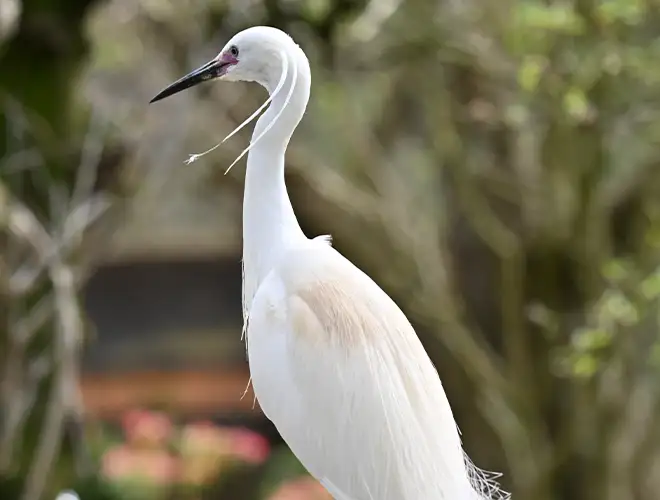
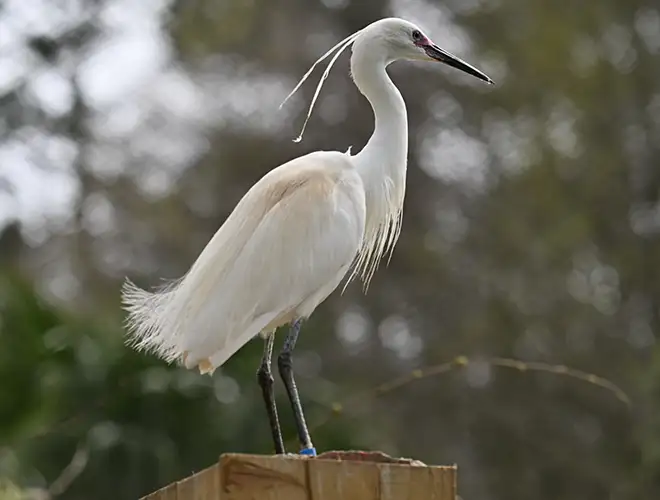
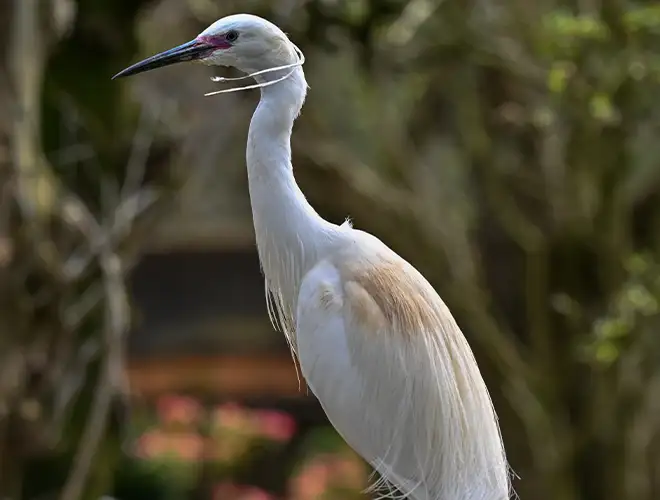
The little egret’s black beak resembles a true dagger: long, thin and slightly curved downward. Its long black legs and yellow toes distinguish it from the great egret. During the breeding season, it develops different types of ornamental feathers at the back of the head, at the base of the neck, at the back of the wings and on the back.
Threats and conservation
Little egret populations appear to be stable and the species is generally not considered threatened despite the decline of wetlands. Once hunted for its ornamental feathers used in fashion to decorate hats, the little egret is today protected in certain regions.