White-cheeked gibbon
I.U.C.N status
International Union for Conservation of Nature


Identity card
Fruits (especially the pulp), leaves, flowers...
Did you know?
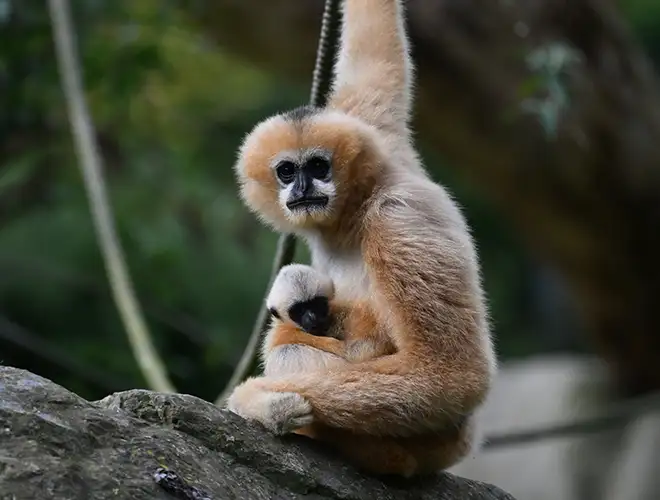
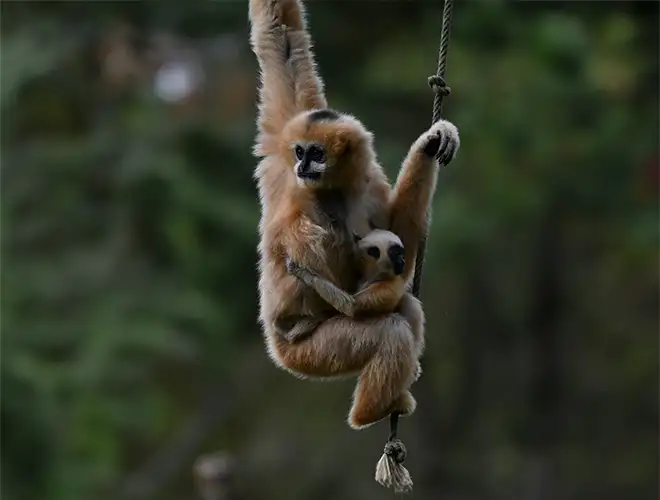
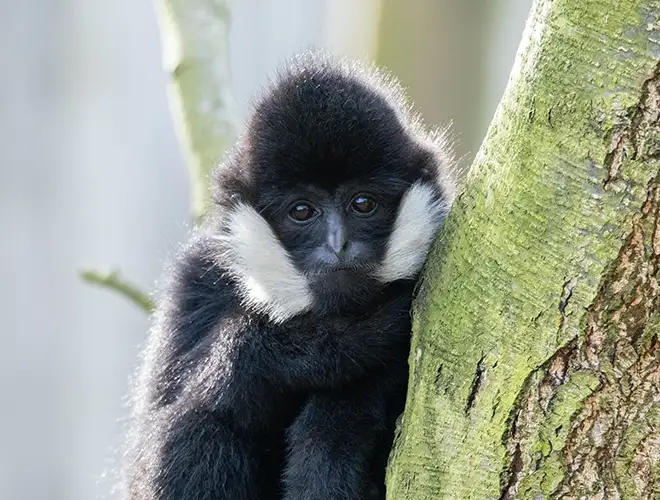
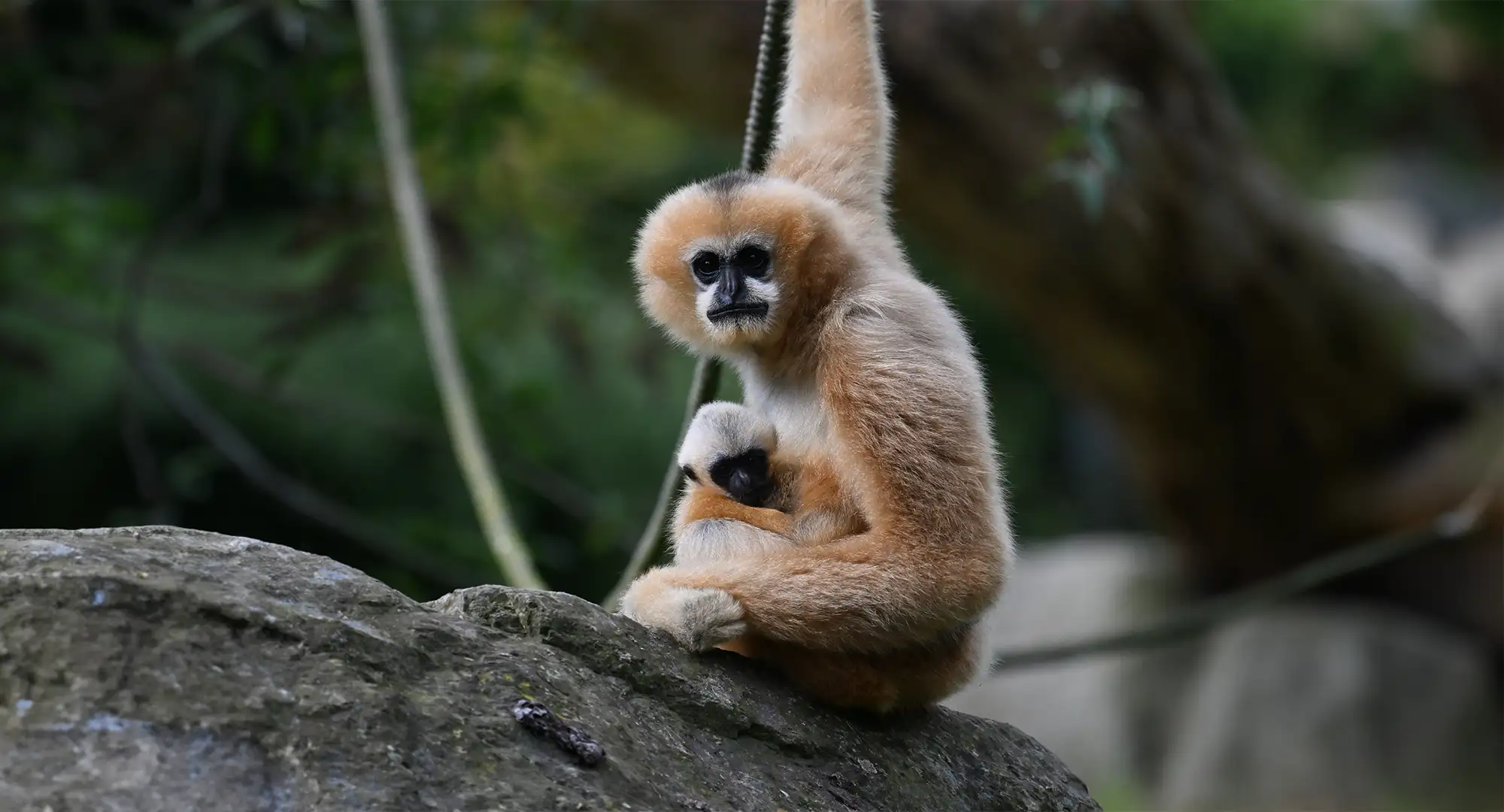
White-cheeked gibbons display sexual dimorphism: males have black fur with white tufts on their cheeks, while females are beige. Their thumbs, on both hands and feet, are opposable, allowing them to grasp food and move easily through the trees thanks to their hook-shaped hands, thus facilitating brachiation.
Threats and conservation
Due to deforestation and poaching, the gibbon population is seriously threatened with extinction. In-situ conservation programmes, such as the Kalaweit project, are being implemented to protect gibbons in their natural habitat. Zoos that are members of EAZA, such as ZooParc de Trégoméur, complement the work of field organisations through European breeding programmes.