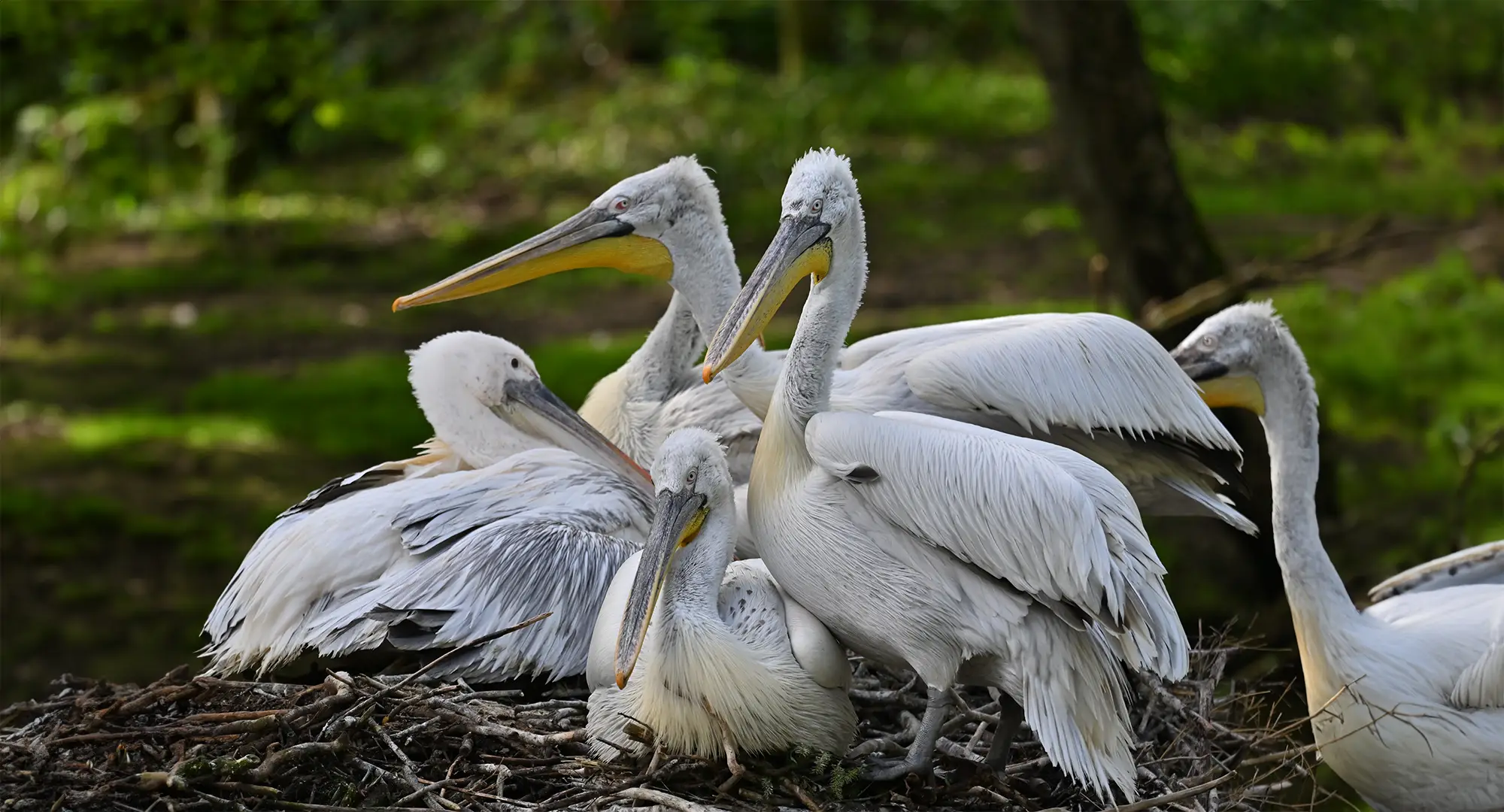
Dalmatian Pelican
I.U.C.N status
International Union for Conservation of Nature


Identity card
Fish.
Did you know?
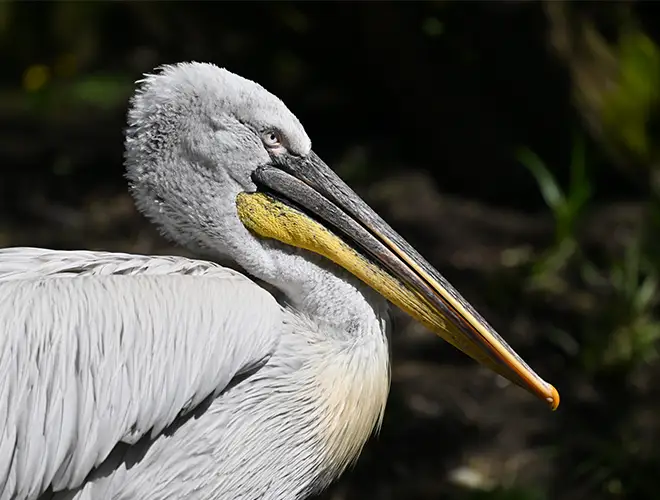
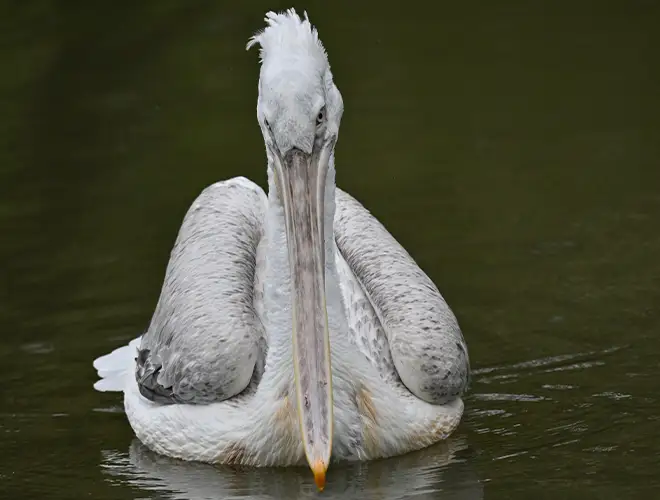
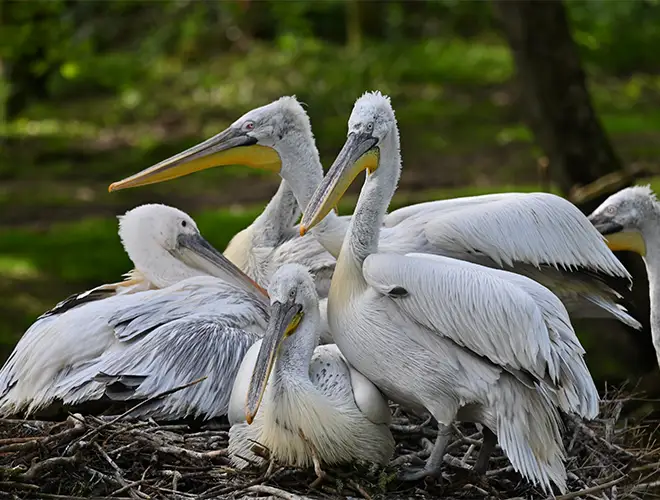
The Dalmatian pelican, the largest of the pelicans, has a fishing technique perfectly suited to its bill: with its water-permeable pouch, it catches fish like a net. In groups, several pelicans gather in shallow water, surround a school of fish and drive it toward the shore. All beaks open at the same time, and the fish are captured in the gular pouch. The water is then expelled and the fish is swallowed head first. Once full, the pelicans return to feed their young left in the nest.
Threats and conservation
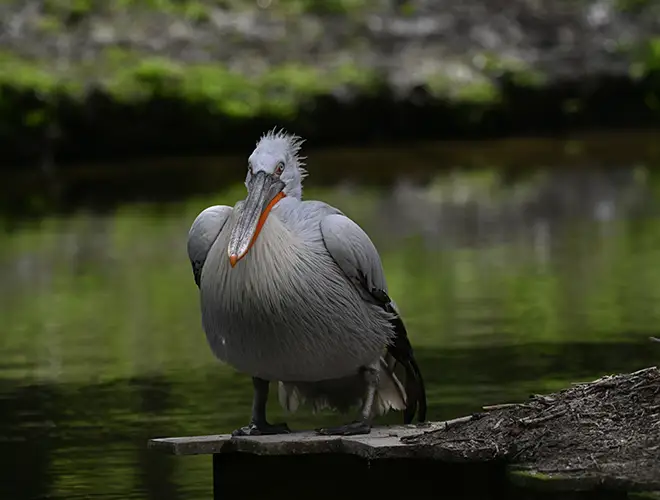
The Dalmatian pelican saw its population plummet in the 20th century, reduced to around a thousand pairs. Thanks to conservation efforts, it has risen to 10,000-14,000 individuals, but remains threatened by fishermen, the draining of wetlands, the depletion of fish stocks, pollution and the destruction of its habitats. Conservation programmes, such as those led by the association Noé and the Tour du Valat, include the creation of artificial nesting islands to protect colonies. Despite these efforts, populations continue to decline and action must continue.