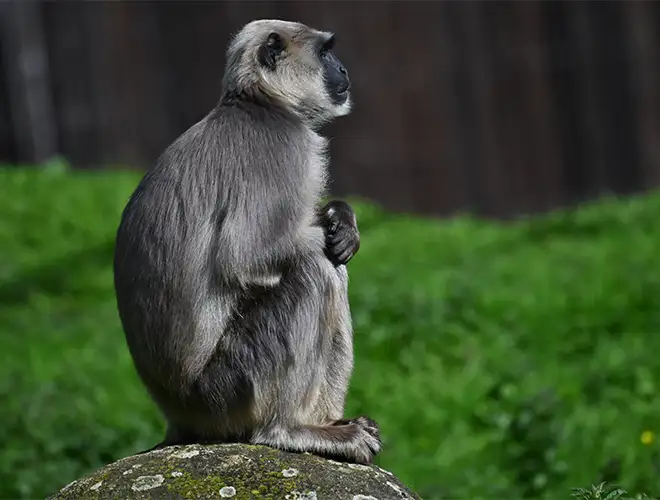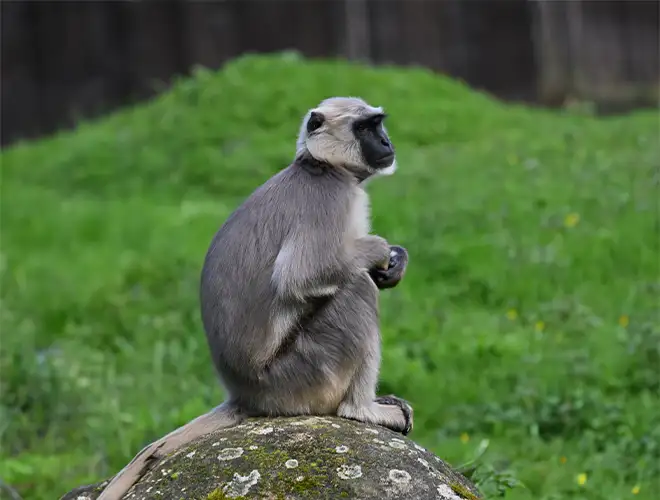
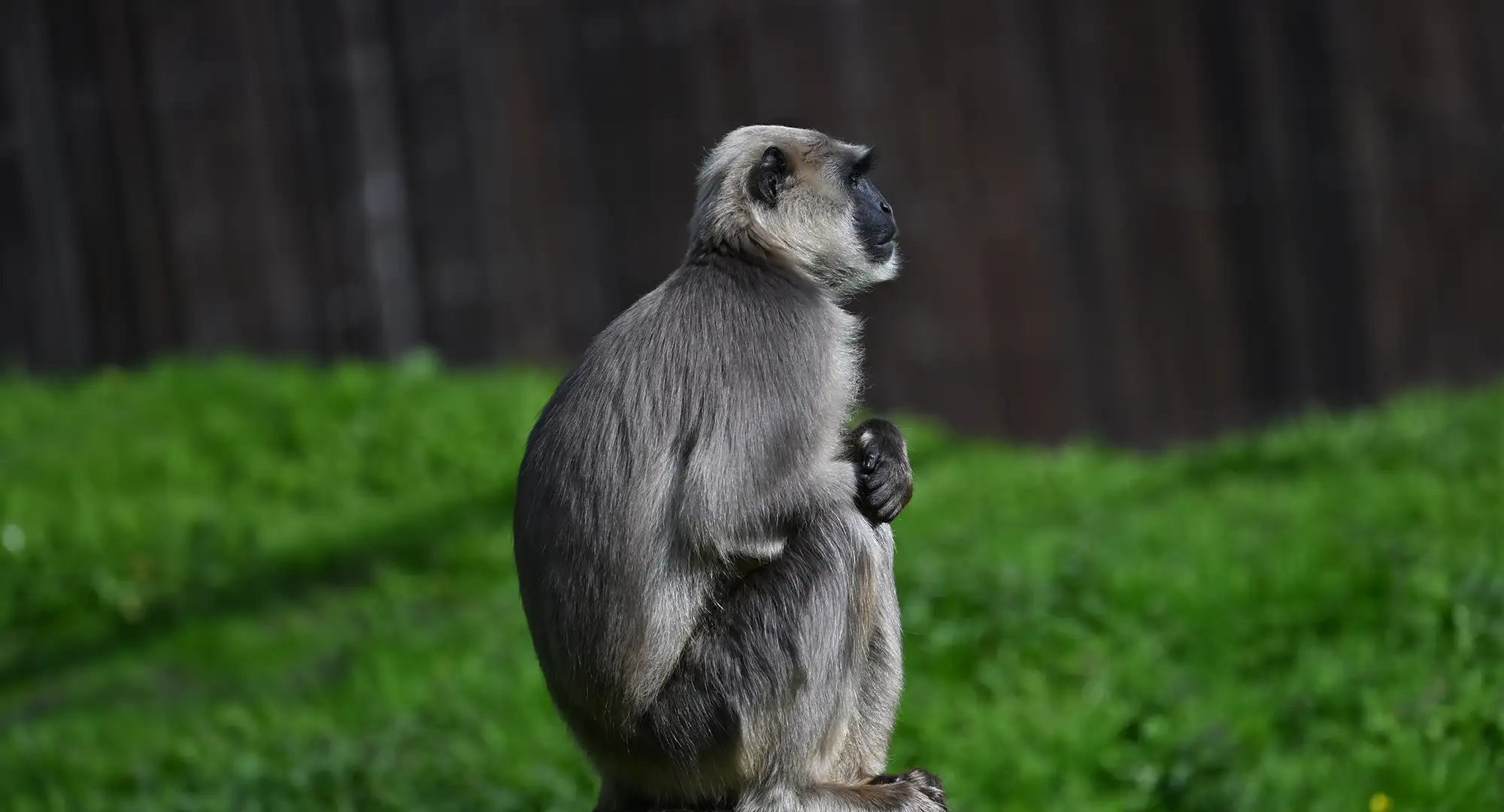
Indian Langur
I.U.C.N status
International Union for Conservation of Nature


Identity card
Leaves, fruits, flowers, bark...
Did you know?
The social structure of langurs varies depending on the habitat. Some populations live in harems, while others form mixed groups. Unlike many primates, Indian langurs spend 80% of their time on the ground, using trees only for sleeping. Moreover, the dominance hierarchy determines their position in the tree: the dominant male occupies the highest and safest position, followed by females and their young, while younger males are found lower in the tree.
Threats and conservation
In Indian mythology, langurs are considered descendants of the monkey god Hanuman. Venerated by Buddhists and Hindus, they are often
welcomed into temples, symbolizing a spiritual connection with the deities. Yet, despite this sacred status, langurs suffer from human activities. Intensive deforestation, driven by logging and agriculture, leads to the loss and fragmentation of their natural habitat, reducing the spaces essential to their survival.